Toby — Autonomous Medicine Delivery Robot
A low-cost hospital prototype that dispenses, transports, and releases medicine only after QR verification.
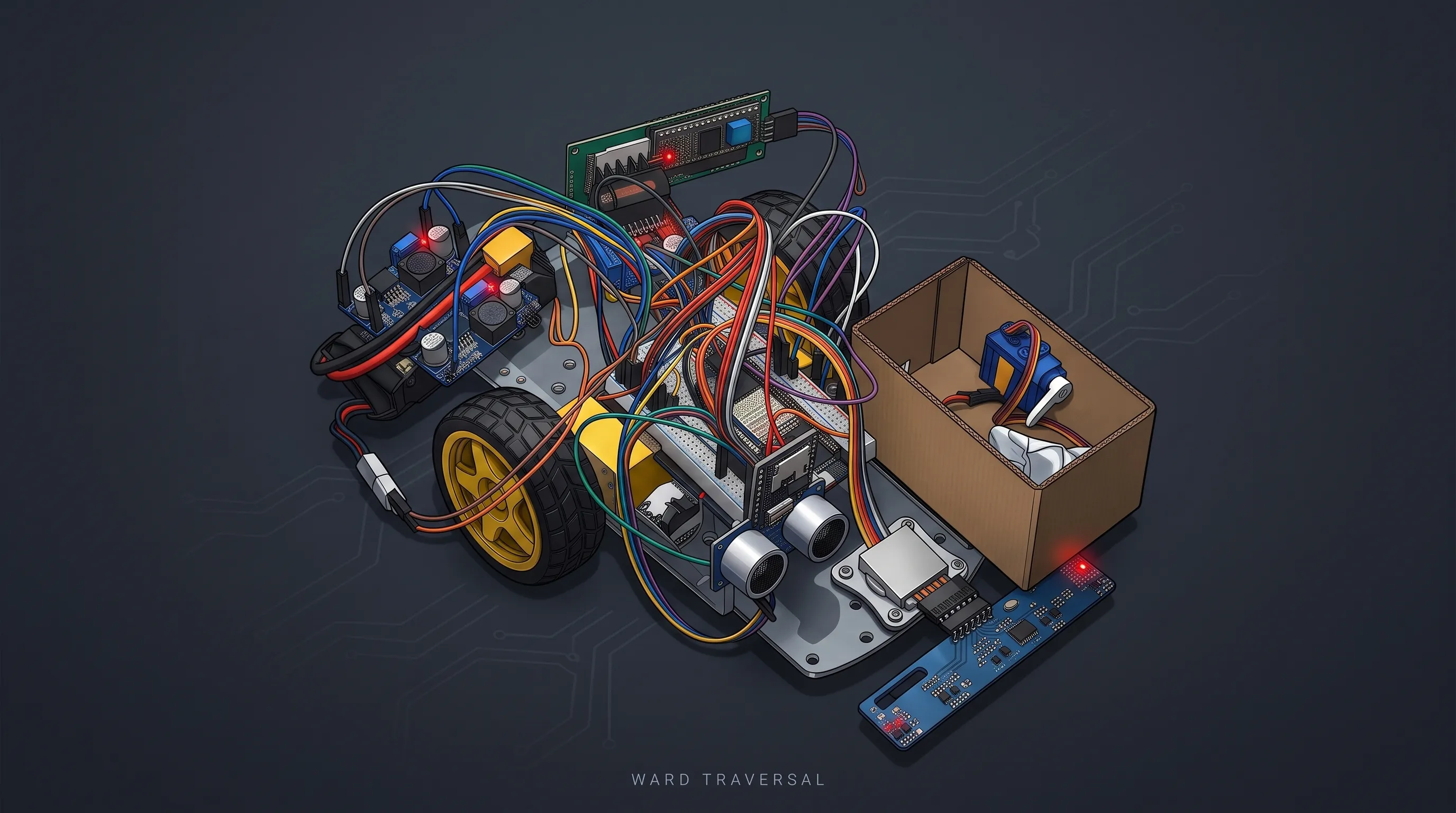
Built by a five-person team for BRAC University’s CSE461 Robotics Lab. The firmware, wiring, and build documentation are on GitHub.
The problem
Routine medicine runs take healthcare workers away from work that needs direct patient attention. Automating the trip sounds simple, but the delivery still has to reach the correct bed, remain locked in transit, and stop safely when the route is blocked.
We set out to test that workflow with inexpensive, replaceable hardware rather than trying to build a hospital-ready machine.
The system
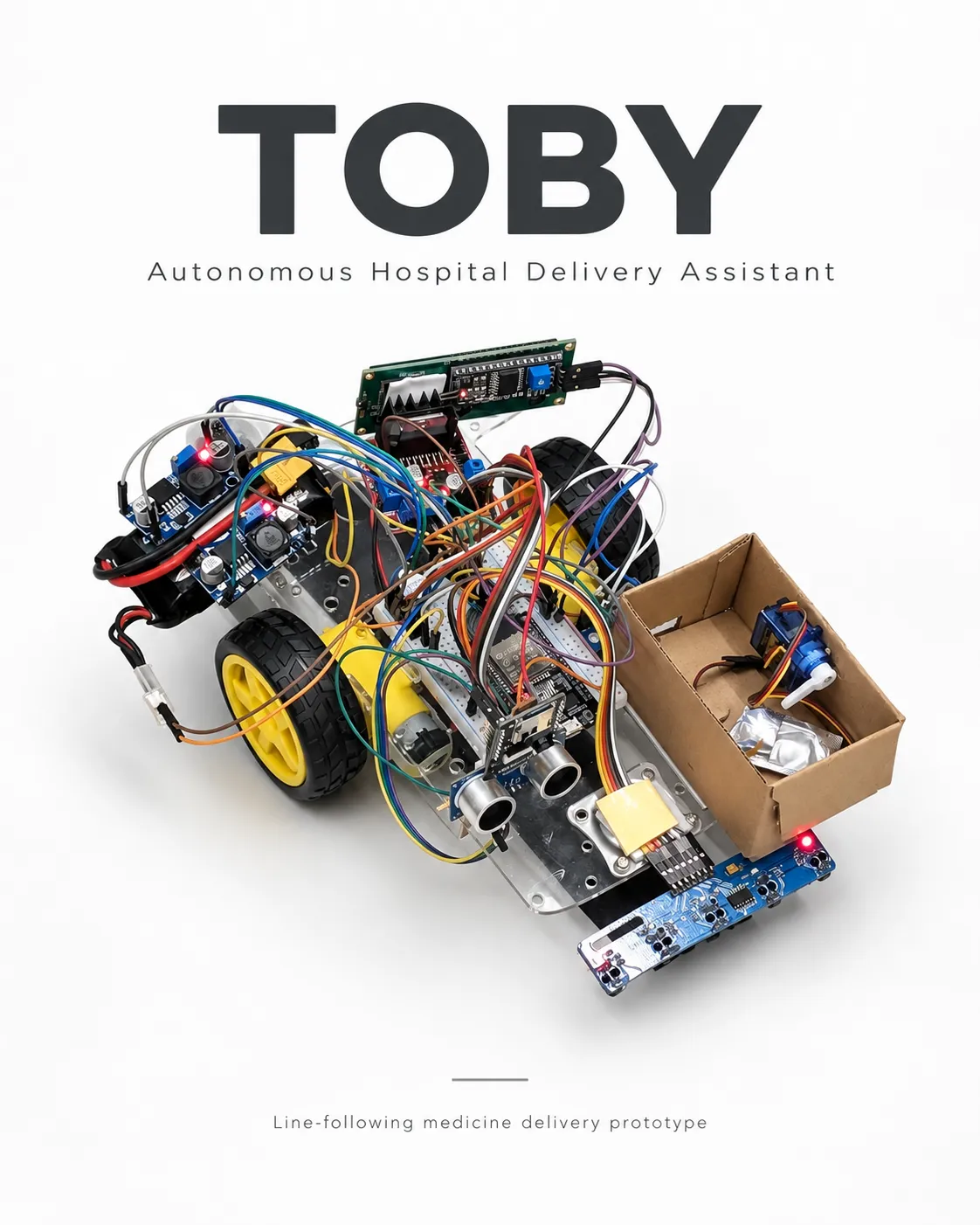
Toby is split into two Wi-Fi-connected units: a fixed dispenser and a two-wheel delivery robot. A nurse selects a bed from the PC control page, the dispenser loads the medicine, and the robot locks its compartment before following a marked route.
At each bed, an ESP32-CAM captures the QR code and sends it to the PC for verification. A match unlocks the compartment; a wrong or unreadable code keeps it closed. An ultrasonic sensor stops the robot for obstacles, and after delivery it turns around and returns to the station.
My contribution
I developed the ESP32-CAM workflow used for QR-code verification and helped assemble the robot. That meant connecting the camera, controller, and PC-side decoder into one path where a successful scan could safely trigger the lock.
What fought back
The camera worked on its own before failing during full integration with the PC. Power regulation also caused trouble, and the height of the IR array produced unstable PID readings during line following. Much of the work became calibration, wiring, and finding problems that only appeared after the separate parts were connected.
Outcome and limits
The prototype completed the intended controlled-environment workflow. The report’s ten-trial estimates placed obstacle stopping and compartment control at 100%, QR verification and line following at 90%, and complete delivery at 80%. We treated those as prototype indicators, not clinical validation.
Its main constraint is the environment: it needs a clean floor line, stable lighting, reliable Wi-Fi, and an external PC. A real deployment would need stronger navigation, on-device vision, broader safety testing, and validation in crowded hospital corridors.